
How to write a check: A step-by-step guide (video)
Updated April 8, 2026 | Published January 15, 2026 by Angela Talbot | Reading Time: 4 minutes
-
Categories:
- Banking
- Teen Checking
Even with the rise of digital payments, knowing how to write a check is still a valuable skill. Checks remain a common way to pay for things like rent, utilities, or services from small businesses. They provide a secure and reliable method of payment with a clear paper trail.
If you’re new to writing checks or just need a quick refresher, you’ve come to the right place. This guide will walk you through the process step-by-step, ensuring your payment is clear, accurate, and secure.
What is a check?
A check is a written, dated, and signed document instructing a bank to pay a specific amount of money to the person or entity named as the recipient. Essentially, it acts as a way to transfer money from your bank account to someone else. Checks are linked to a checking account, where the funds are withdrawn when the check is cashed or deposited by the recipient. They offer a tangible and secure alternative to digital payments, often preferred in situations that require a formal transaction record like paying rent or when dealing with entities like businesses that do not accept electronic payments. Despite modern advancements, checks remain a trustworthy and widely recognized financial tool.
See also: What is a checking account and what comes with it?
How to write a check: Step-by-Step
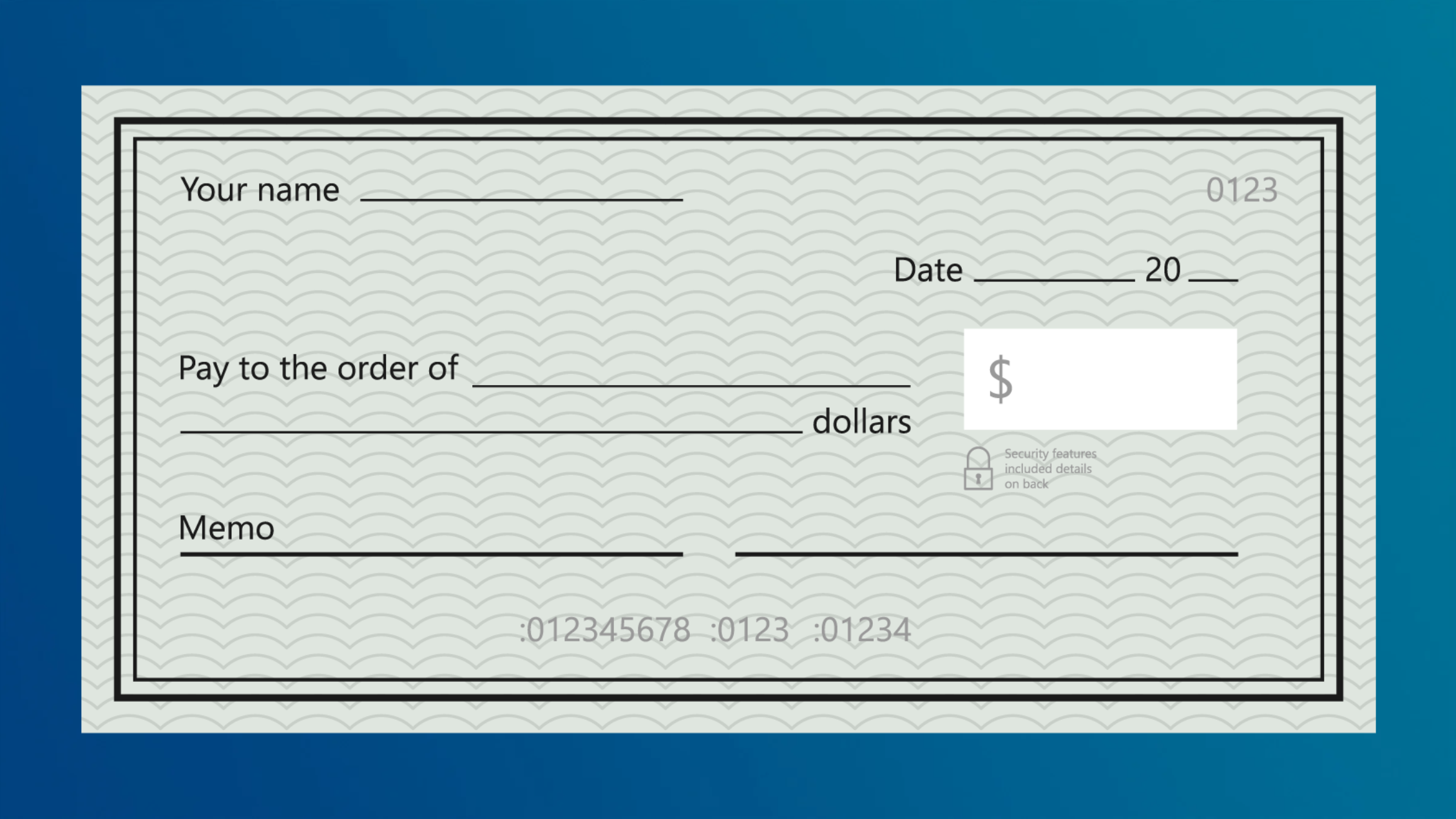
Filling out a check is straightforward once you know where everything goes. Follow these six steps to fill out your check correctly.
1. Write the Date
In the upper right-hand corner, you’ll find a line labeled “Date.” Write the current date here. You can write it out (e.g., “October 26, 2024”) or use a numerical format (e.g., “10/26/2024”). Using the current date is important for record-keeping.
A personal or business check cannot be cashed before that date and will become “stale” 6 months after this date. That means it cannot be cashed anymore. A U.S. Treasury check becomes stale 1 year after the date.
2. Name the Payee
On the line that says “Pay to the Order Of,” write the full name of the person or company you are paying. Be sure to spell their name correctly to avoid any issues with them cashing the check.
3. Enter the Amount in Numbers
To the right of the payee line, there is a small box with a dollar sign ($). In this box, write the payment amount using numbers. For example, if you are paying $150.50, write “150.50.” Be sure to write clearly.
4. Write the Amount in Words
On the long line below the payee, you need to write out the payment amount in words. This is a security measure to confirm the numerical amount. For $150.50, you would write “One hundred fifty and 50/100.” The cents are written as a fraction over 100. After writing the amount, draw a line from the end of the words to the end of the line to prevent anyone from adding to it.
This is considered the “legal line” and if it does not match the number that is written in the box, the financial institution will take the check for what is written
5. Fill in the Memo Line
In the bottom left corner, you’ll see a line labeled “Memo” or “For.” This step is optional but highly recommended. Use this space to note the reason for the payment, such as “October Rent” or “Invoice #12345.” This helps both you and the recipient keep accurate records.
6. Sign the Check
Your signature is the final, most important step. Sign your name on the line in the bottom right-hand corner. A check is not valid without your signature, as it authorizes the bank to release the funds from your account.
Tips for accuracy
To protect yourself from fraud and ensure your payment goes through smoothly, keep these tips in mind:
- Double-check everything: Before you hand over the check, review the date, payee’s name, and payment amounts to make sure they are correct.
- Ensure amounts match: The numerical amount in the box must match the amount written out in words. If they don’t, the bank will typically honor the written amount.
- Use clear handwriting: Write legibly to prevent any confusion or processing delays.
- Never sign a blank check: If you sign a check without filling in the payee and amount, anyone could fill it in and cash it.
How to cash or deposit a check written to you
To cash a check written to you, start by endorsing the back of the check by signing your name on the endorsement line. Ensure that your signature matches the name written on the front of the check to avoid any issues. Then, you have a few options for cashing or depositing it:
- Visit a branch: Take the check to your local bank or credit union branch. You can deposit it into your account or request to cash it. You will likely need to show a valid photo ID, like a driver’s license or passport, to verify your identity.
- Use mobile deposit: Many financial institutions offer mobile deposit through their banking app. To do this, you’ll typically take a picture of the front and back of your endorsed check using your smartphone. This is a convenient way to deposit funds without having to visit a branch.
Before you cash or deposit a check, it’s always a good idea to confirm that it’s legitimate. Check the details and make sure you recognize the person or company that issued it.
What happens if a check is fraudulent?
If you deposit or cash a fraudulent check, the consequences can be significant. Initially, your bank may credit your account with the check amount, but once the check is flagged as counterfeit or invalid, the funds will be removed. This could lead to overdraft fees or a negative account balance if you’ve already spent the money.
Additionally, your bank or credit union might place a hold on your account for further review. If the fraudulent activity is linked to intentional actions, legal consequences, including fines or charges, could follow. It’s crucial to contact your bank immediately if you suspect a check is fraudulent, as they can guide you through the steps to protect your account and resolve the issue. Always take caution and verify a check’s legitimacy before proceeding with any transaction.
Your guide to secure payments
Writing a check is a simple process that provides a secure way to manage your payments. While digital options are convenient, checks offer a reliable alternative that is still widely accepted. By following these steps, you can feel confident that your checks are filled out correctly every time.